

The liminal space between illness and recovery
A bizarre middle world between perception and reality

The Tonic is a lighthearted newsletter for folks interested in learning about long COVID, ME/CFS, and other health conditions. Come for the info; stay for the whimsy. Or vice versa.
If you are new here and curious about my long COVID origin story, check out my Health Rising blog post, My Long COVID Disability Journey. If you are interested in the tools that have been helping me in my long COVID recovery, please check out the Recovery Tools series tab on my Substack site. (Please start with part one, as it includes an important disclaimer about how highly individualized recovery tools can be with a heterogenous illness like long COVID).
Paid supporter shout out!
A big Tonic thank you goes to Brian M. for recently upgrading to a paid subscription!
The Tonic will always be free to read - Amy is so happy you’re here! However, if you are valuing the experience and are able, please consider a show of support by upgrading to a paid subscription. If that’s too much to bite off at the moment, you can also make a one-time contribution through Buy Me a Coffee. Any help is appreciated! Anyone who does gets a 📢 in an upcoming post. Thank you!
Liminal limbo
Hello again, friends. I needed an extended time between posts because I was taking a four-week certification training on pain reprocessing therapy, an evidence-based treatment for chronic pain and symptoms of many kinds. I’m very excited to share more on this in a future post, but you can contact me here if you’re interested in a free consult.
Aside from the training and building up my therapy caseload, what’s been on my mind for a few months has been this interesting liminal state I’m in between active illness and living life as a fully recovered person. There have been many strange moments where I’ve realized there’s sometimes a dissonance between how the world sees me and how I really am and/or how I’m identifying or perceiving myself.
Of course, this “problem” is not something I gave much thought to when I was still living with long COVID. I’ve said here before that I never gave up hope that I’d recover - even when I was at my worst, when symptoms were raging and the belief was minimal, like 3-5%. Case in point, here’s a video of me on one of my worst symptom days:
And a few pics of this ever-hopeful sicko:


(For newer folks, you may be interested in my post Long COVID in pictures).
I always said I’d be grateful for any amount of recovery. For example, when I was at about 20% capacity, I’d have settled for only ever getting to 50%. Just the thought of getting back some of the activities I loved was enough to keep me going.
So now that I’d consider myself at a steady 95-98% recovered, it seems somehow greedy to have anything resembling a complaint about being here. To pull a reframe (something I do often with my therapy clients), this is not so much a complaint as it is an observation. And one that makes me reflective, because it brings with it feelings of strangeness, wonder, discomfort, curiosity, and sometimes touches of grief still.
Let me get more explicit and tell you when and where I first experienced this liminality.
Many of you know I’ve been playing more and more pickleball ever since my local BFF Lisa taught me and another former volleyball player friend how to play last summer. The various pickleball crews I run with tend to skew a good bit older than me, mostly due to the fact that these are the folks available to play on weekday mornings - mostly retirees, though a few younger folks who work in the service industry. When I first started playing more, I was hardly working yet and so I was available in the mornings; now, I’m working more but have a good amount of flexibility. Therapy clients tend to favor evening appointments, so I can usually squeeze 1-2 mornings of weekday play in most weeks.
Last fall, I was still getting my ‘sea legs’ and my energy/conditioning back after years of doing not much more than laying around or walking. I would fatigue fairly easily and might be the first to volunteer to sit out a game when we had to take turns, or I would listen to my body and decide to call it a day. This would sometimes lead to a comment like, “C’mon! You’re too young to be that tired!” (frequently compounded by the fact that no one can believe I’m 50; they all say something between 28-38. It’s kind of hard to get too cocky about looking ‘good for your age’ when an illness basically had you sheltering in place for five years, but alas).
Other times, I’d have to hear that some 70-year-old did an hour of cardio before coming to play three hours pickleball that morning.
I recently did a two-hour drills session that nearly leveled me with exhaustion by the hour and a half mark, only to watch one of the other participants who I’d say was between 65-70 reserve a court for another hour after, something that would have been utterly out of the question for me. He then went on to boast that he is an endurance sport guy, frequently running marathons and doing triathlons.
Ouch
Under ‘normal’ circumstances, comments and situations like this would hit a 50-year-old a certain way coming from 60–80-year-olds. For a recovering sicko, it hits even harder.
Sure, it triggers old achiever and competitive athlete patterns (the same patterns that got triggered 20 years ago when I was dealing with infertility - I hate to be told I can’t do something).
But it’s more than that. It hits that tender place in me that is only a year into recovery. The place that still feels shame about not living up to people’s expectations of me, around being taken ‘off-line’ for a full five years from the non-elderly ages of 44-49.
I wasn’t ready to slow down yet at 44. I was still playing competitive volleyball, working out with heavy weights, climbing mountains, holding down a more than full-time job, socializing multiple nights per week, traveling.
Yes, there is a certain amount of both ableism and ageism in thoughts like these. But they are honest thoughts that trigger real feelings.
(Also, just typing all of the things I was doing at age 44 makes me pause for a second to consider how go-go-go and dysregulated I was. I thought I was happy living that life, but in reality, there was no time in there for any groundedness or presence, no slowing down to just…be. There were messages my body was sending me that I was not only flat-out ignoring but sticking my tongue out at).
I digress. Back to the liminal. The comments and situations I’ve encountered while playing pickleball put me in this funny place of feeling like I had to explain why someone so much younger than these folks can’t muster the same energy that they can (for a while, that made sense; my two-day CPET report from 2022 stated that I had the VO2 max of “an inactive 76yo woman”. I was 46 at the time, so that one really stung).
I didn’t go around offering up my health status unprompted, but if I got a comment like the one above, or a certain look when I chose to rest, I would tell folks that I had long COVID for five years and only recently recovered enough to be playing pickleball (and to my great surprise, not a single person doubted, disbelieved, or dismissed me; I got nothing but empathy and thoughtful questions about my experience). I felt like it was my responsibility to bridge the gap between their expectations of someone my age and the reality.
In truth, it wasn’t and shouldn’t be my responsibility to do this. But it did have the intended effect in that I no longer have to explain my offers to sit out a game. Many of these folks are now friends. They know my story. I am also able to view them with compassion when there’s an hour left to play, yet they’re packing up their stuff to leave. They know their limits and they model that for me, and in that sense, we have more in common now than just our love of pickleball.
But alas, this liminal limbo land isn’t done with me yet. Just last night, I was playing outdoors, and my brain just hit a wall. It’s like a switch was flipped and nothing made sense anymore. My partner gave me funny looks when I didn’t react to balls I usually get to, or when I had absolutely no clue what the score was. I began to have a feeling of derealization, like I wasn’t on the court, like everything was closing in on me. I finished the game, sat for a moment, played one more half-assed game (I know, I know), and then called it.
Later, once Baldy and I were home, I began crying when I told him how it felt to get those looks and comments about balls I had missed when I was feeling so off. It was my old buddy shame returning. Normally, athlete to athlete, those kinds of looks and comments might be fair game (pun intended) when your partner, whose head was in the game two points ago, is now…somewhere else.
I am just really sensitive to this idea that what people (even the ones who saw me at my sickest) see now is a healthy, vibrant person. A lot of times that perception feels correct and I own that perception, especially when a fellow player calls me “smasher” (referring to my overhead shot, the only one I was good at immediately because of 30+ years of playing volleyball) or I’m asked to separate from another strong player in a game of fours in order to make the teams ‘fair.’
But at other moments, their perception isn’t correct. I’m feeling fatigued, extra sore, or like a mental fogzilla.
Do I warn folks ahead of time that I’m in this state, to ward off their expectant comments and looks? Sometimes I’m not aware of it until they are, and then, like I did last night, I talk about it after almost each point that I mess up. It’s like I’m going to put it out there before anyone is left to wonder. That doesn’t feel great, but it seems to make me feel a little less bad in the moment.
And in all of these examples of this in between place between illness and recovery, I’ve realized that it’s as if an invisible illness has disappeared from view even more.
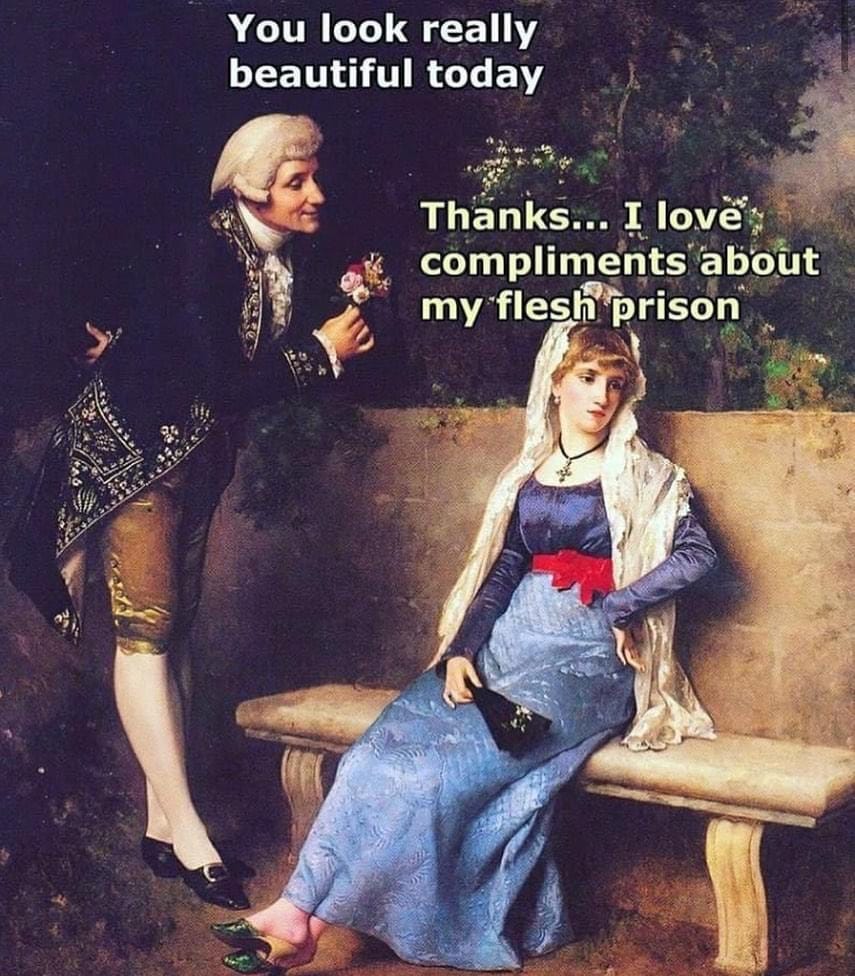
You’re not who you were when you were sick (hooray!), yet you’re not (yet? ever again?) who you were before you got sick (hooray?!).
Somehow, you want to be seen as being in this middle place without having to explain that that’s where you are, but it’s awkward, uncomfortable, and perhaps no one’s business/responsibility to care.
So where does that leave me/us? What’s the ‘lesson’ here? I think it’s two-part:
I’m/we’re still recovering, to a lesser degree physically and to a somewhat larger degree emotionally. We may not always be this reactive or sensitive. We may get more experience at living in this liminal space. Or we may gain more physical recovery (or physical conditioning) to the point where this becomes a non-issue. I also have to imagine that, for me in particular, as physiological age becomes more aligned with energy levels, other people’s expectations of me will calibrate accordingly. But ultimately, I can only exert so much control over that.
Give people more grace. This goes both ways. On the one hand, we don’t know what someone has been through that might be impacting their energy or abilities at any given time. Be mindful of this and try to use it to stop the ageist/ableist comment before it leaves our mouths.
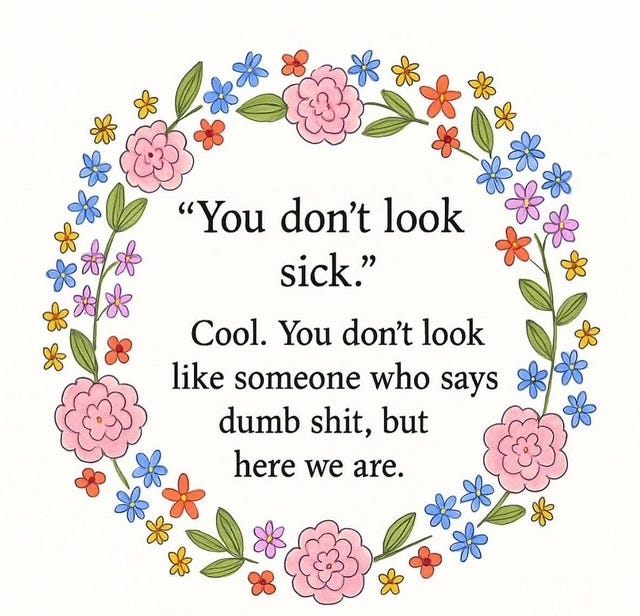
On the other hand, sensitive-me can give my fellow players some room to do the things that fellow athletes sometimes do - expect or want more from their partners. It is not their intention to make me feel bad or cry. They are not operating with the full story, and that’s not their fault.
I am going to attempt to do what I often coach my therapy clients to do: hold it all more loosely. More gently. Have compassion for myself and understanding for others.
Key word: attempt. I’ll be sure to report back :)
Now it’s your turn
Have you made any gains in your recovery, and are you also now in some sort of weird limbo land between perception and reality? Or does this resonate for you because of a different situation in your life, possibly unrelated to illness? I’d love to hear from you.
Before you go…make some money!
A fellow Substacker, Kira Stoops, posted about Ally Bank in her newsletter many moons ago. It’s an online bank that offers higher interest rates than most other banks. I used her referral code (thanks, Kira!) and opened a savings account with 3.5% interest (it’s gone as high as 3.8%). And, by using her code, she got $50 and I got $100 (after three months of minimal monthly deposits to a savings account). How can you go wrong? They have options for savings, checking, and investment accounts.
If this sounds good to you too, here’s my referral code. Last year, three of you beauties used my code and we all made some extra dough. Could you be next?

💰 Long COVID: it costs world’s economy billions.
🦠 Preventing COVID: a pill that can prevent COVID after exposure.
💥 Long COVID as rupture: a beautiful, thought-provoking piece by Lauren, The Wellness Aesthetic.

😣 Upcoming webinar: When Someone You Love Is in Chronic Pain: A Live Q&A for Caregivers. Register here.
🪺 Polycystic Ovarian Syndrome (PCOS): just got renamed to something (polyendocrine metabolic ovarian syndrome) more validating and in line with the experience.
🪲 Ticks in 2026: especially bad. Here’s how to stay safe.
💊 Mental health medication: six questions to ask your doctor before starting one.
😟 Anxiety: if you experience it, here’s a meditation specifically for you.
❤️🩹 Your Nervous System Can Heal (You’re Not a Special Case): a video by Helmut, the Mindful Gardener (content warning: filled with swearing, sarcasm, and humor to get the point across)

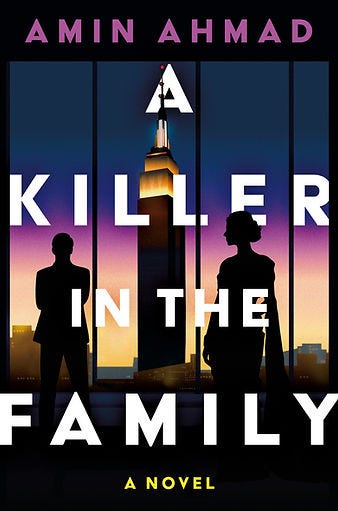
📖 New book alert!: my dear friend, the acclaimed writer Amin Ahmad, just published his latest thriller A Killer in the Family, and I loved every page of it. It’s one of the books featured in this article in The Guardian: The best recent crime and thrillers – review roundup. Do check it out!
🎈 Hot air balloon…in your backyard? Hot air balloon with 13 aboard makes emergency landing in California backyard. The pilot did an amazing job because that backyard was NOT big.
🌎 Planet Earth: brought to you live. So cool!
🦅 While you’re at it: check out the baby bald eagles webcam from Big Bear Valley in California. They’re like teenagers now. Check ‘em out before they fly the nest! Oh, and barn owls!
📽️ ‘Very demure, very mindful’: how Jools Lebron went viral – and her life fell apart. But she’s getting it back, and who doesn’t love a good comeback story??
🐈⬛ 💩 And finally, it’s this week’s Cat Dump. Fashion alert, some helpful info, and an important pupdate.
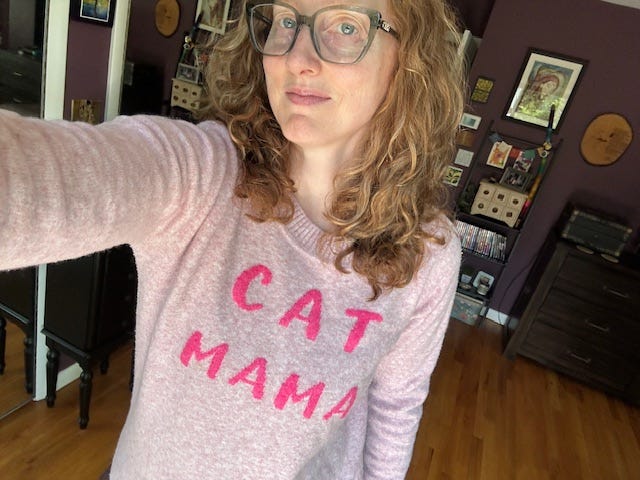
First, fashion. Check out this cozy sweater I got for a song from Vinted (a totally addictive thrifting site).
Next, check out Jackson Galaxy’s YouTube playlist for cat preparation in case of emergency.
Now for the Operation Domesticate Ripley “pupdate” - those of you who have been subscribed for a while may remember that five years ago, we adopted a feral girl that we named Ripley. She came from a hoarding situation in Florida and the rescuer was seeking people with garages or barns to adopt her as a feral, since she was not acclimating to people. She lived in our detached garage for four years before becoming more attached to Baldy last year and hanging out more and more near our basement door. We hoped to get her inside before last winter, but alas, we have had to move at her speed (she did go missing between our two 20+ inch snowstorms this winter, and we feared the worst, until she came trotting back up the driveway exactly a week after she bolted when the snowplow came).
Well, I am happy to report that Ripley now lets us pet her! And she absolutely loves it. She meows and writhes around on our stone wall and we give her all the love she wants (and treats). She mainly resides in what I refer to as mini-homeless encampment under some bushes near our basement door, perched up high on a stone wall where she can monitor predators (like the coyotes that like to get up close). Our resolve to get her inside before winter has only strengthened (and maybe to get her inside before the intense heat of NY summers sets in - stay tuned!).


So great to hear from you Amy! Your analysis of where you find yourself right now and the lessons learned have provided me with food for thought. I have experienced very bad hair loss over the last few years (for a few reasons) and have recently started wearing wigs. It’s not the same thing you are going through, but I have struggled with my perception of myself, how much to share with people etc. You have given me a lot to think about.
As always, thanks for the shoutout. I too have been steadily increasing my limits and it’s so true the frustration of feeling good and wanting to be more like my old self but also not(?!?). “I thought I was happy living that life” hit hard in that regard. I just keep reminding myself that I’m building up to something even better but I’m not good with patience. I’m working on it! And I’m excited to check out your book rec. I love a good crime read.